Author: admin

  • What to Include in an RFQ for Custom Metal Fabrication

    What to Include in an RFQ for Custom Metal Fabrication

    A weak RFQ almost guarantees a frustrating quoting process. Vague specs lead to mismatched bids that can’t be compared apples to apples, missing details lead to follow-up emails that stretch a two-week quote turnaround into a month, and unclear expectations lead to a final price that doesn’t match what actually shows up on the shop floor.

    A well-built RFQ does the opposite. It lets suppliers quote quickly and accurately, it lets you compare bids on equal footing, and it sets the tone for a partner relationship built on clear communication from the very first interaction. This guide walks through exactly what to include.

    Why RFQ Quality Determines Quote Quality

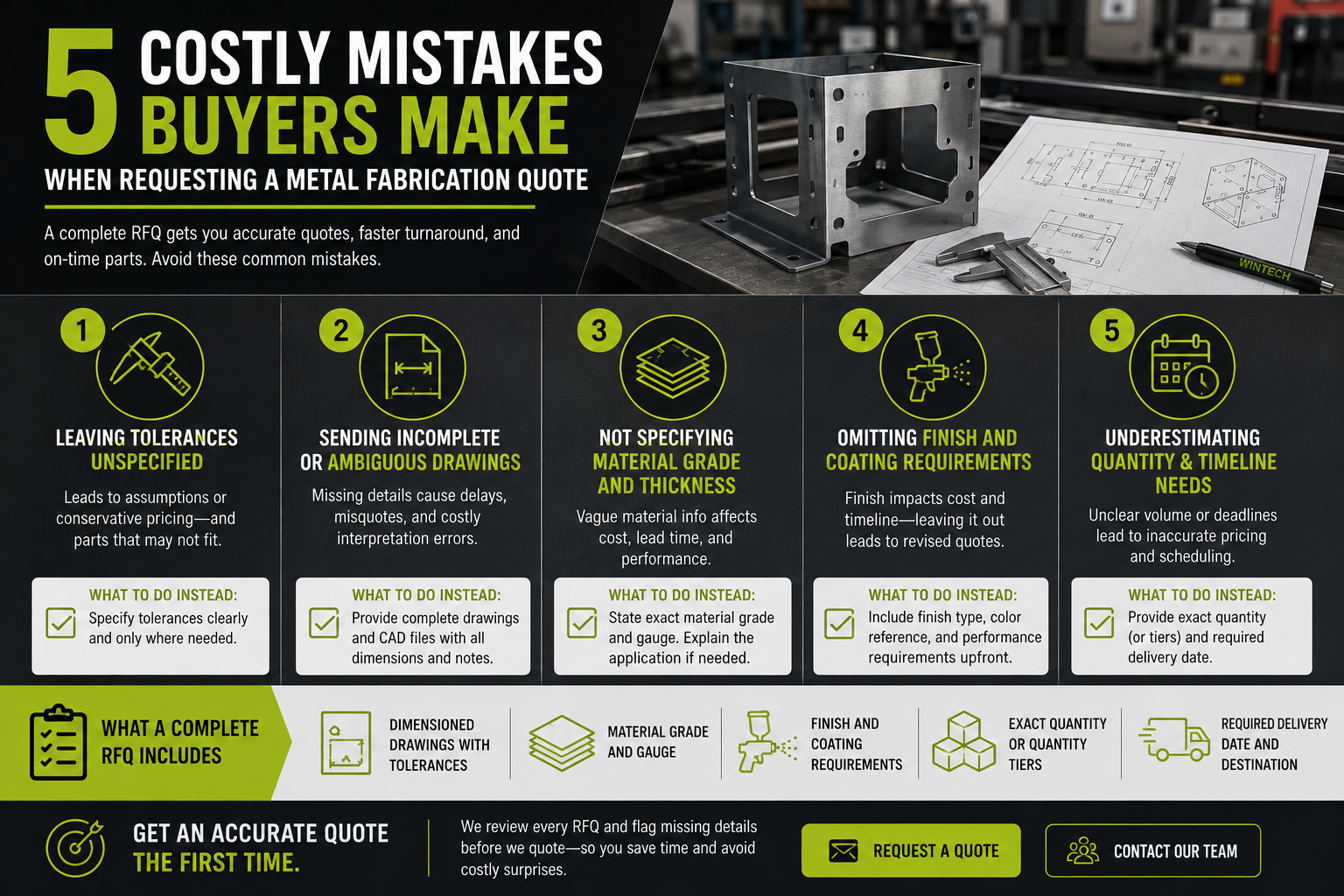
    Fabricators quote based on the information in front of them. If your RFQ leaves out a critical detail, one of two things happens: the supplier makes an assumption (which may not match what you actually need), or they come back with questions (which slows down your timeline). Either way, an incomplete RFQ costs you time, and often costs you money if assumptions turn out wrong once production starts.

    The goal of a strong RFQ isn’t just getting a number back quickly. It’s getting an accurate number, one that won’t change once the supplier actually sees the real requirements.

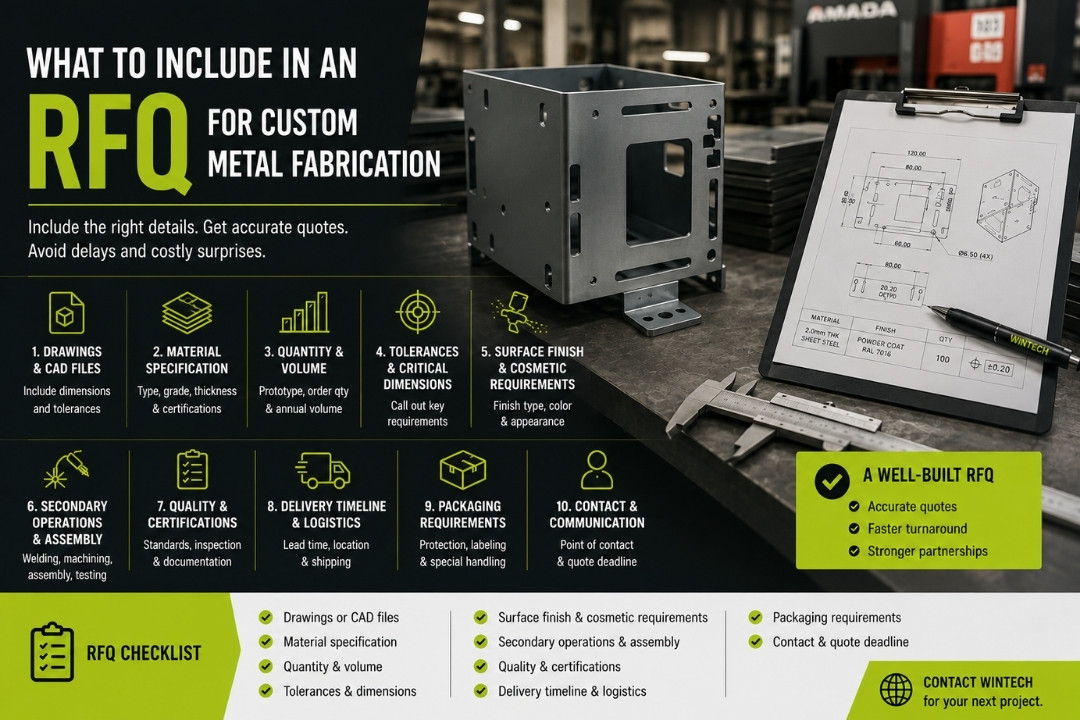
    1. Complete Technical Drawings or CAD Files

    This is the foundation of any RFQ. At minimum, include:

    • 2D drawings with fully dimensioned views, including tolerances
    • 3D CAD models (STEP, IGES, or native format) where available, since these speed up quoting and reduce interpretation errors
    • Clear callouts for critical dimensions, GD&T requirements, and any features that require special attention

    If drawings are still in development, say so. A supplier can often still provide a rough budgetary quote, but flag it clearly as preliminary so there’s no confusion later about why the final quote differs.

    2. Material Specification

    Be specific. “Steel” isn’t enough information to quote accurately. Include:

    • Material type and grade (such as A36 mild steel, 304 stainless, 5052 aluminum)
    • Gauge or thickness
    • Any required material certifications (mill certs, material traceability requirements)
    • Approved substitutions, if any, in case your primary specification has long lead times or supply constraints

    Material cost and availability can swing quotes significantly, so precision here directly affects how comparable your bids will be.

    3. Quantity and Volume Expectations

    Quantity affects pricing more than almost any other RFQ variable, since it determines whether tooling costs, setup time, and batch efficiencies come into play. Include:

    • Prototype or first article quantity, if applicable
    • Initial production order quantity
    • Annual or projected volume, even if it’s an estimate

    If you expect the program to scale over time, say so. Suppliers price differently for a one-time order of 50 units versus an initial order of 50 units that’s expected to grow to 5,000 annually, and knowing your growth trajectory helps them quote tooling and capacity decisions appropriately.

    4. Tolerances and Critical Dimensions

    Beyond what’s already noted on the drawing, call out which tolerances are truly critical to function versus which are standard shop tolerances. This helps suppliers understand where they need to invest in tighter process control (which affects cost) and where standard capability is sufficient.

    Being explicit here also invites useful pushback. A supplier who understands your functional requirements can flag if a tolerance is tighter than necessary, potentially saving you cost without affecting the part’s performance.

    5. Surface Finish and Cosmetic Requirements

    Specify:

    • Required finish type (powder coat, plating, anodizing, mill finish, and so on)
    • Color or finish specification (RAL codes, Pantone references, or physical samples if color matching matters)
    • Cosmetic acceptance criteria, particularly for visible or consumer-facing parts
    • Any masking or selective finishing requirements

    Finishing is often quoted as a separate line item, and unclear finish requirements are one of the most common sources of post-quote clarification requests.

    6. Secondary Operations and Assembly Requirements

    If your parts require more than cutting and forming, spell it out:

    • Welding requirements, including joint type and any applicable welding codes or certifications needed
    • Machining operations beyond the primary fabrication process
    • Assembly instructions, including hardware, fasteners, or sub-component integration
    • Any testing or functional verification required before shipment

    Leaving secondary operations vague is one of the fastest ways to end up with quotes that aren’t actually comparable, since one supplier may have assumed a scope the others didn’t.

    7. Quality and Certification Requirements

    Different industries carry different baseline expectations. Include:

    • Required certifications (ISO 9001, AS9100, IATF 16949, ISO 13485, and so on)
    • Inspection and documentation requirements (dimensional reports, certificates of conformance, material certs, PPAP, first article inspection)
    • Any industry-specific compliance requirements (RoHS, REACH, or similar)

    If your industry doesn’t require formal certifications but you have internal quality expectations, state them anyway. A supplier’s quote should reflect the actual quality process your program requires, not a generic baseline.

    8. Delivery Timeline and Logistics

    Include:

    • Required lead time for prototypes or first articles
    • Required lead time for production quantities
    • Delivery location and any special packaging or shipping requirements
    • Whether you need staggered deliveries, blanket orders, or just-in-time delivery scheduling

    If your timeline is firm (tied to a product launch or a customer commitment, for example), say so directly. Suppliers can often accommodate tight timelines with the right advance notice, but only if they know about the constraint upfront.

    9. Packaging Requirements

    Packaging is easy to overlook but can meaningfully affect both cost and part condition on arrival. Note any requirements around:

    • Protective packaging for cosmetic or precision parts
    • Palletization or crating standards
    • Labeling requirements
    • Any customer-specific packaging specifications you need to pass through

    10. Point of Contact and Communication Expectations

    Include who suppliers should direct questions to, and by when you need the quote returned. If you’re running a formal bid process with a set deadline, state it clearly, along with how you’d like questions handled (a single point of contact, a Q&A document, and so on) to keep the process fair and efficient across all bidders.

    RFQ Checklist Summary

    Before sending your RFQ, confirm it includes:

    • Complete drawings or CAD files, with clear tolerance callouts
    • Full material specification, including grade and certification requirements
    • Quantity for prototypes, initial orders, and projected annual volume
    • Critical tolerances flagged separately from standard tolerances
    • Finish and cosmetic requirements, including color specification
    • All secondary operations: welding, machining, assembly, testing
    • Required quality certifications and documentation
    • Delivery timeline and location
    • Packaging requirements
    • Point of contact and quote deadline

    A Better RFQ Leads to a Better Partner Relationship

    A thorough RFQ does more than get you a fast, accurate quote. It signals to potential suppliers that you run a well-organized program, which tends to attract more serious, detailed responses in return. It also gives you a much stronger basis for comparing bids, since suppliers quoting against identical, complete information are far easier to evaluate side by side than suppliers each filling in their own assumptions.

    If you’re not sure whether your RFQ has everything a supplier needs, a good fabrication partner will tell you what’s missing rather than just quoting around the gaps. That responsiveness, even before you’ve placed an order, is often a useful early signal of how the relationship will work once you do.

    Have a project ready to quote? Contact us with your drawings and specifications, and our team will follow up with any clarifying questions before returning an accurate, detailed quote.

  • Metal Furniture for Workspaces & Home

    Metal Furniture for Workspaces & Home

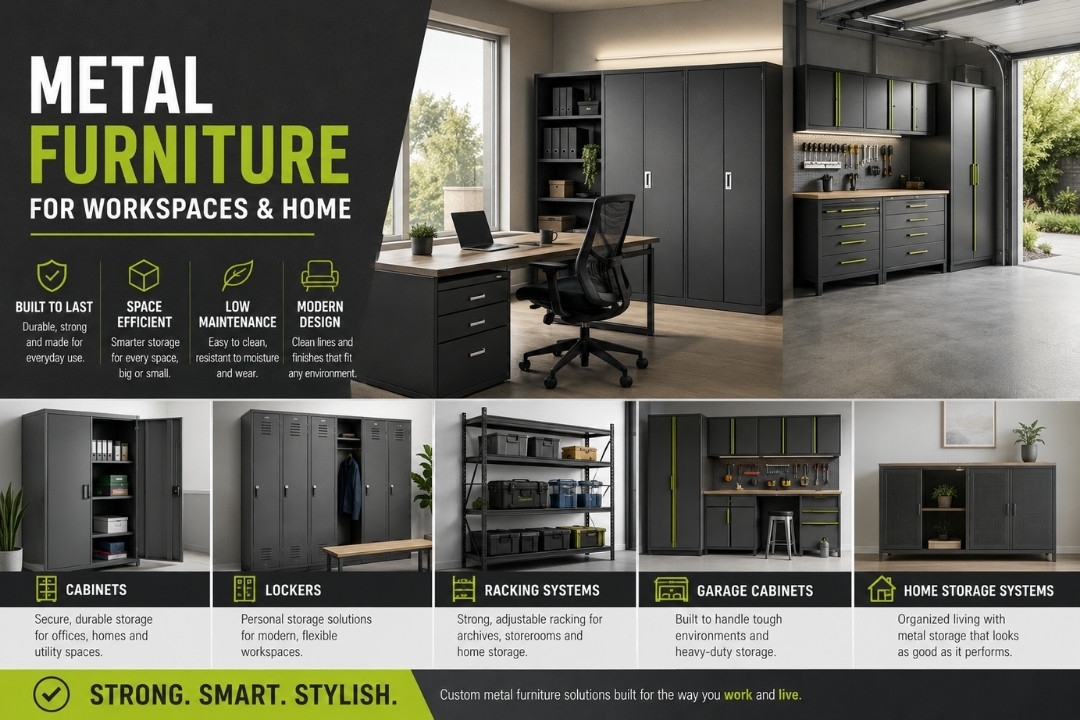
    Metal furniture has moved well beyond the industrial storage room. In modern workspaces and homes, it’s increasingly chosen for its combination of durability, clean aesthetic, and long-term value, a shift away from disposable furniture toward pieces that are built to last and look intentional doing it.

    Why Metal Furniture Fits Modern Workspaces and Homes

    Durability without bulk. Fabricated steel and aluminum furniture can be engineered for strength without the visual heaviness of older industrial designs, fitting cleanly into contemporary workspace and home interiors.

    Design flexibility. Powder coating and finishing options allow metal furniture to be produced in a wide range of colors and textures, moving well beyond the utilitarian gray-metal look many people associate with older storage furniture.

    Longevity. Unlike particleboard or laminate furniture that degrades with humidity, weight, or repeated use, well-fabricated metal furniture holds its structural integrity and appearance over years of regular use, a meaningful factor as more buyers weigh long-term value over lowest upfront cost.

    Space efficiency. For workspaces and homes where square footage is at a premium, custom-dimensioned metal storage furniture makes more efficient use of available space than generic, one-size-fits-most furniture.

    Storage Furniture for Workspace Environments

    Cabinets. Office and workspace storage, from shared supply cabinets to personal storage, benefits from metal cabinetry that’s durable enough for daily shared use while maintaining a clean, professional appearance appropriate for modern office design.

    Lockers. As flexible and hybrid work arrangements increase demand for shared workspace storage, lockers provide secure, space-efficient personal storage in offices and coworking environments, with configurations and finishes suited to contemporary workplace design.

    Racking systems. Storage rooms, archive areas, and back-office spaces in workspace environments benefit from racking systems dimensioned to the actual space available, rather than generic warehouse-style racking that doesn’t fit a workspace’s design standards.

    Storage Furniture for the Home

    Home storage systems. Garage storage, utility rooms, and home organization systems benefit significantly from metal construction, resistant to moisture, capable of supporting heavier loads than typical home furniture, and requiring far less maintenance over time than wood-based alternatives.

    Cabinets. Metal cabinetry in home applications, such as laundry rooms, utility spaces, and general household storage, provides durable, secure storage that holds up to the practical demands of home use without the wear issues common to less durable materials.

    Garage cabinets. The garage is one of the hardest-working storage spaces in a home, and it’s also one of the least forgiving environments for furniture. Temperature swings, moisture, heavier loads, and frequent use all take a toll on wood or laminate storage. Metal garage cabinets hold up to these conditions without warping, swelling, or weakening over time, while offering the load capacity needed for tools, equipment, and household overflow. Configurations can be tailored to a garage’s actual layout and storage needs, from wall-mounted cabinet runs to floor-standing units built around heavier tool or equipment storage.

    Racking systems. Home storage, particularly in garages and utility areas, benefits from racking systems that can be configured to the specific space and load requirements of the home, rather than adapting generic shelving that doesn’t fit efficiently.

    What to Look for in Metal Furniture for Workspace and Home Use

    Finish quality. For furniture in visible, design-conscious spaces, finish quality matters as much as structural durability. Powder coating with consistent, high-quality application is the difference between furniture that looks intentional and furniture that looks industrial by accident.

    Configuration flexibility. Standard furniture dimensions rarely match the exact space available in a home or workspace. Custom sizing makes the difference between furniture that fits a space efficiently and furniture that’s simply placed in a space and worked around.

    Load-appropriate construction. Not all metal furniture needs the same structural specification. A home storage cabinet has different load requirements than an industrial equivalent. Right-sizing the construction to the actual application avoids both underbuilt furniture and unnecessary overspending.

    Long-term value. Metal furniture typically costs more upfront than lower-durability alternatives, but the calculation changes when factoring in service life. Furniture that lasts a decade or more without replacement or significant maintenance often represents better long-term value than furniture that needs replacing every few years.

    Custom Metal Furniture vs. Off-the-Shelf Options

    Off-the-shelf metal furniture works well for straightforward, standard applications. Custom fabrication becomes the better choice when:

    • Available space doesn’t match standard furniture dimensions
    • Specific finish, color, or design requirements need to align with an interior design standard
    • Load or configuration requirements fall outside what generic products offer
    • Multiple identical units are needed and consistency across the order matters

    Sourcing Metal Furniture for Workspace and Home Projects

    Whether furnishing a single home project or specifying storage furniture across a workspace renovation, working with a fabricator who can move from design consultation through custom fabrication and finishing ensures the final furniture fits both the physical space and the design intent, rather than settling for generic furniture that technically works but never quite fits right.

    Wintech fabricates custom metal storage furniture, including cabinets, garage cabinets, lockers, racking, and home storage systems, engineered for modern workspaces and homes. Contact us to discuss your project.

  • Laser Cutting for Metal Fabrication: Capabilities, Tolerances & When to Use It

    Laser Cutting for Metal Fabrication: Capabilities, Tolerances & When to Use It

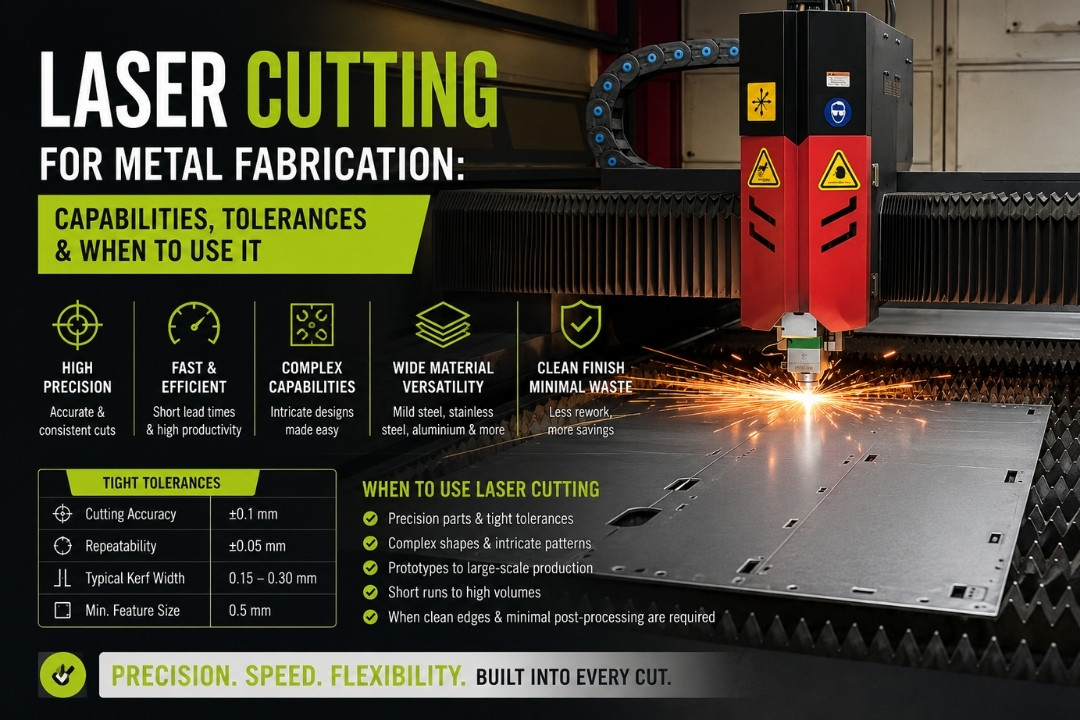
    Laser cutting has become the default choice for sheet metal fabrication and for good reason. It’s fast, precise, and capable of cutting complex geometries that would be impractical with mechanical methods. But “we use laser cutting” doesn’t tell you much about whether a supplier can hit your tolerances, handle your material thickness, or deliver the edge quality your application needs.

    This guide covers how laser cutting actually works, what determines quality and tolerance, and when it’s the right process choice versus alternatives like plasma or waterjet cutting.

    How Laser Cutting Works

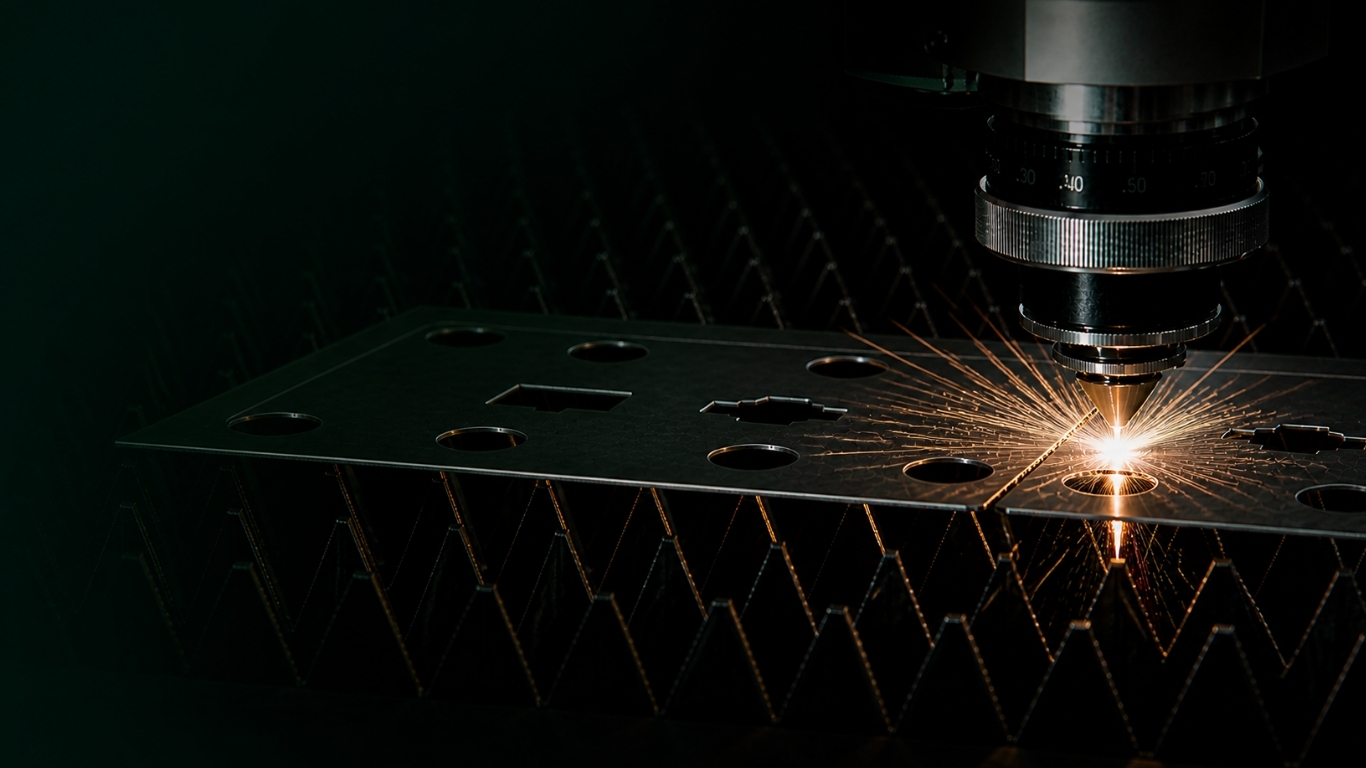
    A fabrication laser directs a high-powered, focused beam through a nozzle onto the metal surface. The beam melts or vaporizes the material along the programmed path, while an assist gas, typically oxygen, nitrogen, or compressed air, blows the molten material out of the kerf (the cut width).

    Modern fabrication shops predominantly use fiber lasers rather than older CO2 laser technology. Fiber lasers deliver higher energy efficiency, faster cutting speeds on thin-to-medium gauge material, and lower operating costs, which is why they’ve largely become the industry standard for sheet metal work.

    Materials and Thickness Ranges

    Laser cutting handles a wide range of metals, though capability varies by laser power and material type:

    MaterialTypical Thickness Range
    Mild steelUp to ~1 inch (with high-power lasers)
    Stainless steelUp to ~0.75 inch
    AluminumUp to ~0.5 inch
    Galvanized steelUp to ~0.25 inch

    Thicker material is cuttable, but cutting speed drops and edge quality can degrade, which affects both cost and secondary finishing needs. For very thick plate, plasma or waterjet cutting sometimes becomes more cost-effective than pushing a laser to its upper limit.

    Achievable Tolerances

    Laser cutting is prized for tight, repeatable tolerances, but the achievable tolerance depends on material thickness, part geometry, and machine calibration. As general guidance:

    • Thin gauge material (under 0.125 in): tolerances around ±0.003–0.005 in are commonly achievable
    • Medium gauge (0.125–0.25 in): typically ±0.005–0.010 in
    • Thicker material (above 0.25 in): tolerances widen further, often ±0.010–0.020 in

    These are general ranges, not guarantees, always confirm a specific supplier’s tolerance capability for your exact material and thickness combination, and request sample dimensional reports if tolerance is critical to your application.

    Edge Quality and Assist Gas Selection

    The assist gas used during cutting significantly affects edge quality, speed, and downstream processing:

    • Oxygen assist reacts exothermically with the metal, allowing faster cutting of thicker mild steel, but leaves an oxidized edge that may need additional finishing before painting or welding.
    • Nitrogen assist produces a clean, oxide-free edge ideal for stainless steel and aluminum, especially when the part will be welded or requires a cosmetic finish. Slower and more gas-intensive than oxygen cutting.
    • Compressed air, a lower-cost option for thinner, less critical parts where edge oxidation isn’t a concern.

    If your parts will be welded, plated, or left with a visible edge, ask your fabricator which gas they’ll use and why — it directly affects both appearance and downstream processing cost.

    When Laser Cutting Is the Right Choice

    Laser cutting is generally the best fit when:

    • You need tight tolerances on flat or near-flat sheet metal parts
    • Your geometry includes intricate cutouts, small holes, or fine detail
    • You’re running small-to-medium batch sizes where tooling costs (like stamping dies) aren’t justified
    • Material thickness falls within the sweet spot of ¼ inch or under, where laser cutting is both fast and highly precise

    When to Consider Alternatives

    Laser cutting isn’t always the optimal process:

    • Very thick plate (over ~1 inch): Plasma or waterjet cutting is often faster and more cost-effective.
    • Reflective materials like copper or brass at high thickness: These can be challenging for certain laser configurations and may cut more reliably with waterjet.
    • Heat-sensitive applications: Waterjet cutting introduces no heat-affected zone, which matters for materials prone to warping or metallurgical changes from heat input.
    • Extremely high-volume, identical parts: Stamping may ultimately be more economical once tooling costs are amortized across large production runs.

    A good fabrication partner will tell you when a different process serves your part better — even if it means a smaller laser cutting order for them.

    Design Considerations That Affect Laser-Cut Part Cost and Quality

    A few design choices have an outsized effect on both cutting cost and final part quality:

    • Minimum feature size: Small holes or slots relative to material thickness can distort during cutting. A general rule of thumb is that hole diameter shouldn’t be smaller than the material thickness.
    • Nesting efficiency: Part geometry affects how efficiently parts nest on a sheet, directly impacting material utilization and cost.
    • Kerf width: The laser removes a small amount of material along the cut path. For tight-fitting mating parts, this needs to be accounted for in the design.
    • Heat-affected zone (HAZ): Even with laser cutting’s relatively narrow HAZ, tightly spaced cuts can cause localized heat buildup and part distortion.

    Involving your fabrication partner during the design phase, rather than after drawings are finalized, often catches these issues before they become costly rework.

    Laser Cutting as Part of a Larger Fabrication Process

    For most OEM parts, laser cutting is just the first step. Cut blanks typically move on to forming, welding, and finishing operations. A fabricator who handles the full process in-house, rather than outsourcing cutting to a separate shop, can maintain tighter dimensional control across the entire part lifecycle, since the same team managing tolerances at the cutting stage also owns the downstream operations.

    Looking for a metal fabrication partner who treats your program like their own? Contact us to discuss your part requirements and see how our engineering and quality teams support OEM programs from prototype through full production.

  • How to Choose a Metal Fabrication Partner: An OEM Buyer’s Guide

    How to Choose a Metal Fabrication Partner: An OEM Buyer’s Guide

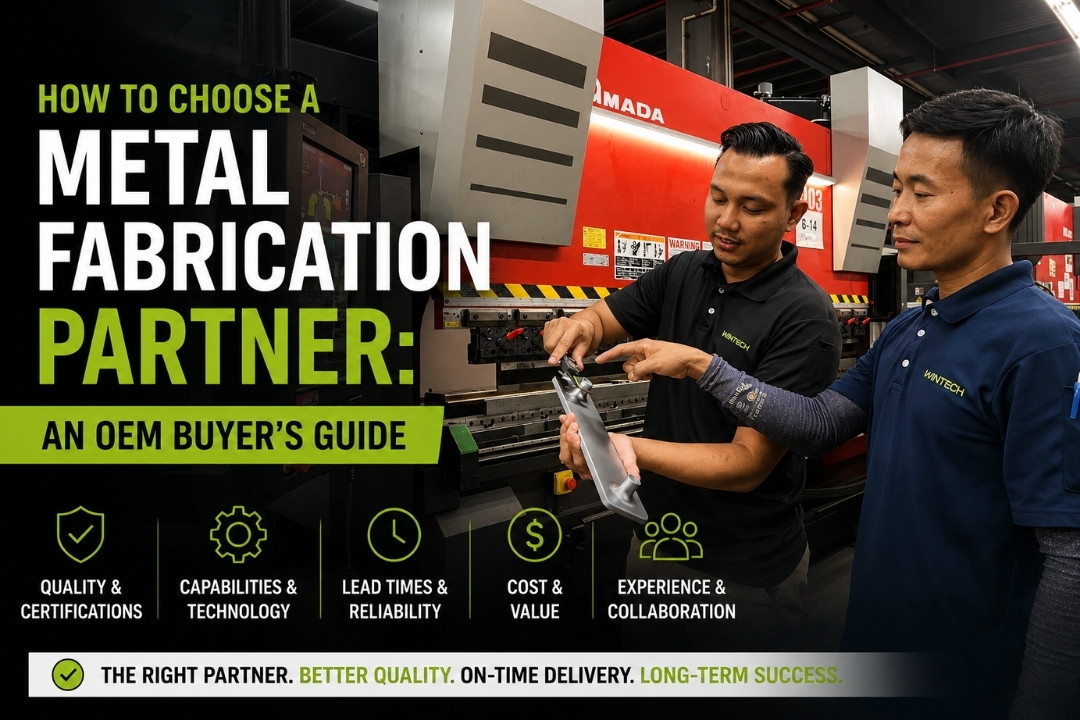
    Choosing the wrong metal fabrication supplier doesn’t just cost you money. It costs you time, program schedules, and sometimes your own customer relationships. For OEMs, a fabrication partner isn’t a line item, it’s an extension of your engineering and production team. Get it wrong, and you’re managing missed deadlines, inconsistent tolerances, and quality escapes. Get it right, and you gain a partner who helps you design smarter, launch faster, and scale without drama.

    This guide breaks down the criteria that actually matter when evaluating a metal fabrication partner and the red flags that should make you keep looking.

    Why the Right Fabrication Partner Matters More Than Price

    It’s tempting to make sourcing decisions on quoted price alone. But the total cost of a fabrication relationship includes far more than the per-part number:

    • Rework and scrap from inconsistent tolerances
    • Expedite fees when a supplier can’t hit committed lead times
    • Engineering hours spent chasing down design-for-manufacturability issues that should have been caught upfront
    • Program risk if a supplier can’t scale with your volume

    A partner with slightly higher unit pricing but tighter process control, better communication, and reliable delivery will almost always cost less over the life of a program. The goal isn’t the cheapest quote — it’s the lowest total cost of ownership.

    1. Manufacturing Capabilities That Match Your Part Mix

    Not every fabricator does everything well. Before you even request a quote, map your part portfolio against a supplier’s core capabilities:

    • Sheet metal cutting (laser, plasma, waterjet)
    • CNC punching and forming
    • Press brake bending
    • Welding (MIG, TIG, robotic)
    • Machining for secondary operations
    • Finishing (powder coat, plating, anodizing)
    • Assembly and light kitting

    A shop that’s excellent at high-volume laser cutting may not be the right fit for low-volume, high-complexity welded assemblies. Ask directly: what percentage of your current work looks like my parts? A supplier whose typical job resembles yours will have already solved the problems you’re about to run into.

    2. Quality Systems and Certifications

    Certifications aren’t just a checkbox — they’re a proxy for whether a shop has documented, repeatable processes.

    At minimum, look for:

    • ISO 9001 — baseline quality management system
    • Industry-specific certifications where relevant (AS9100 for aerospace, IATF 16949 for automotive, ISO 13485 for medical)

    But certification alone isn’t proof of quality. Ask to see their process for handling non-conformances. A supplier who can walk you through a real corrective action report (with root cause analysis, not just “we retrained the operator”) is showing you a mature quality culture.

    3. Tolerance Capability and Honesty About It

    Every fabricator will tell you they can hold tight tolerances. Fewer will tell you what it costs to actually hold them consistently, in production, at volume, not just on a single prototype part.

    When evaluating tolerance capability:

    • Ask for their standard tolerance chart by process (cutting, forming, welding)
    • Ask what tolerances require special tooling or secondary operations
    • Request sample parts or case studies with dimensional reports, not just marketing claims

    A trustworthy partner will tell you when your drawing calls for tolerances tighter than the process needs and suggest where you can open up tolerances without affecting function, saving you cost. That kind of design-for-manufacturability feedback is a strong signal of a true engineering partner rather than a job-shop vendor.

    4. Capacity and Scalability

    Your fabrication partner needs to handle where your program is today and where it’s going in 12-24 months. Ask about:

    • Current utilization rates (a shop running at 95% capacity has little room for your growth or urgent orders)
    • Equipment redundancy (what happens if their one CNC laser goes down?)
    • Multi-shift operations and overtime flexibility
    • Raw material sourcing relationships and lead times

    Scalability cuts both ways, you also want a supplier that’s not so large that a mid-volume OEM program gets deprioritized behind bigger accounts.

    5. Lead Time Reliability, Not Just Speed

    A quoted lead time only matters if it’s consistently met. Ask potential partners for their on-time delivery rate over the past 12 months, and ask how they define “on time”, some suppliers measure against ship date, others against original promise date, which can hide a lot of expediting and rescheduling.

    Also probe:

    • How they communicate when a delay is likely, and how early
    • Whether they hold safety stock or raw material on your behalf for repeat programs
    • Their process for expediting without compromising quality

    6. Engineering and Design Support

    The best fabrication partners get involved before the drawing is finalized. Look for suppliers who offer:

    • Design-for-manufacturability (DFM) reviews
    • Material substitution recommendations
    • Prototype-to-production transition support
    • CAD/CAM collaboration during quoting

    This kind of upfront collaboration catches costly design issues — bend relief problems, weld access issues, tolerance stack-up — before they become expensive change orders mid-program.

    7. Communication and Program Management

    Especially for multi-part assemblies or ongoing production programs, ask who your day-to-day point of contact will be, and how issues get escalated. Fragmented communication where every question requires three emails and a phone call, is a leading indicator of future program headaches.

    Good signs:

    • A named program manager or dedicated account contact
    • Proactive status updates rather than reactive ones
    • Clear escalation paths for quality or schedule issues

    8. Financial Stability and Longevity

    A fabrication partner going out of business mid-program is one of the most disruptive events an OEM can face. While you can’t fully audit a supplier’s financials, you can look for indirect signals:

    • Years in business and ownership stability
    • Investment in new equipment (a sign of reinvestment and confidence)
    • Customer references you can actually call, particularly in your industry

    Red Flags to Watch For

    • Vague answers about certifications or quality processes
    • Reluctance to provide references or sample dimensional reports
    • Pricing significantly below the rest of the field with no clear explanation
    • No dedicated point of contact for your program
    • Pushback on design-for-manufacturability conversations

    Building a Long-Term Fabrication Partnership

    The strongest OEM-fabricator relationships aren’t transactional, they’re collaborative. The right partner should feel less like a vendor you manage and more like an extension of your engineering team, one that flags problems early, suggests improvements, and scales alongside your business.

    If you’re evaluating fabrication partners for an upcoming program, it’s worth requesting a facility tour or virtual walkthrough, reviewing a few real (not cherry-picked) quality records, and starting with a smaller trial run before committing volume. The upfront diligence is far cheaper than the cost of switching suppliers mid-program.

    Looking for a metal fabrication partner who treats your program like their own? Contact us to discuss your part requirements and see how our engineering and quality teams support OEM programs from prototype through full production.

  • OEM Metal Fabrication Services: End-to-End Precision Manufacturing for Global Industries

    OEM Metal Fabrication Services: End-to-End Precision Manufacturing for Global Industries

    End-to-End Metal Fabrication Capabilities

    We deliver complete OEM metal fabrication solutions, combining advanced technology, skilled workmanship, and stringent quality control to support high-performance applications across global industries.

    Our integrated capabilities cover the full production cycle:

    1. Uncoiling and Shearing

    Efficient processing of metal coils into precise sheet sizes, ensuring consistency for downstream fabrication.

    2. Laser Cutting

    High-precision laser cutting technology enables complex geometries, tight tolerances, and clean edges across a wide range of materials.

    3. Punching

    Accurate and repeatable punching processes designed for high-volume production with consistent quality.

    4. Bending

    Advanced press brake systems shape metal into precise forms required for structural and functional applications.

    5. Stamping

    High-speed stamping solutions for mass production of durable components with uniform specifications.

    6. Welding

    Robust welding capabilities, including MIG and TIG processes, ensuring strong and reliable assemblies.

    7. Surface Finishing

    Comprehensive finishing processes to enhance corrosion resistance, durability, and product appearance.


    Supporting Industries Worldwide

    We provide OEM metal fabrication solutions tailored to the needs of diverse industries across global markets:

    Commercial Building & Facilities

    Structural components, enclosures, and fabricated systems supporting building infrastructure and operations.

    Industrial Manufacturing & Semiconductor

    Precision components engineered for high-performance manufacturing environments requiring accuracy and reliability.

    OEM & Equipment Manufacturers

    End-to-end fabrication support from prototype development to large-scale production of equipment components.

    Workspaces & Home Applications

    Custom metal fabrication for furniture structures, workspace solutions, and modern living environments.

    Healthcare & Education

    Durable and high-quality fabrication for environments requiring safety, hygiene, and long-term reliability.


    Why Work With Us

    Integrated Manufacturing

    Our end-to-end fabrication capabilities streamline production, reduce lead times, and improve supply chain efficiency.

    Precision Engineering

    We ensure tight tolerances and consistent quality using advanced fabrication technologies and controlled processes.

    Scalable Production

    Flexible manufacturing capacity supports both low-volume prototypes and high-volume production runs.

    Quality Assurance

    Stringent quality control is applied throughout every stage of production to meet international standards and specifications.


    A Reliable Partner for OEM Manufacturing

    OEM metal fabrication is a critical component of your supply chain. Choosing the right partner ensures consistent product quality, operational efficiency, and long-term reliability.

    We support global customers with:

    • Consistent and repeatable manufacturing quality
    • Efficient production timelines
    • Technical expertise across fabrication processes
    • Reliable delivery for international projects

    Contact Us for OEM Metal Fabrication Enquiries

    For OEM metal fabrication requirements or project discussions, please contact our team:

    📧 enquiries@wintech.com.my

    We will respond promptly to understand your specifications and provide the most suitable fabrication solutions.